So, you’ve been wondering what a vegan eats to survive thousands of miles on a trail? The short answer is: a lot. As a vegan, my trail diet isn’t about restaurant feasts; it’s a strategic operation designed for maximum calories, nutrients, and convenience, all while staying true to my vegan principles. What my backpacking meals lack in presentation, they more than make up for in flavor. Here’s a breakdown of what fuels me.
Breakfast: The High-Fat Kickstart
As the first step in my daily fueling strategy, my breakfasts are designed to be a quick and efficient source of energy to power me through the morning miles. That’s why I prioritize fat, which provides a dense calorie hit for sustained fuel.
- Morning Coffee Ritual: I start my day with instant coffee, adding MCT oil and chia seeds for a powerful dose of fat and fiber. This mix is easy to prepare and gives me sustained energy, helping me avoid the post-caffeine crash.
- No-Cook Kickstart: Among my favorite breakfast options is a quick and easy ProBar meal bar topped with a layer of peanut butter. This combination provides a perfect balance of carbs for immediate energy and fats for long-lasting fuel, all in a convenient, no-cook package. I’ll sometimes eat half and save the other half for after I’ve hiked a few miles.
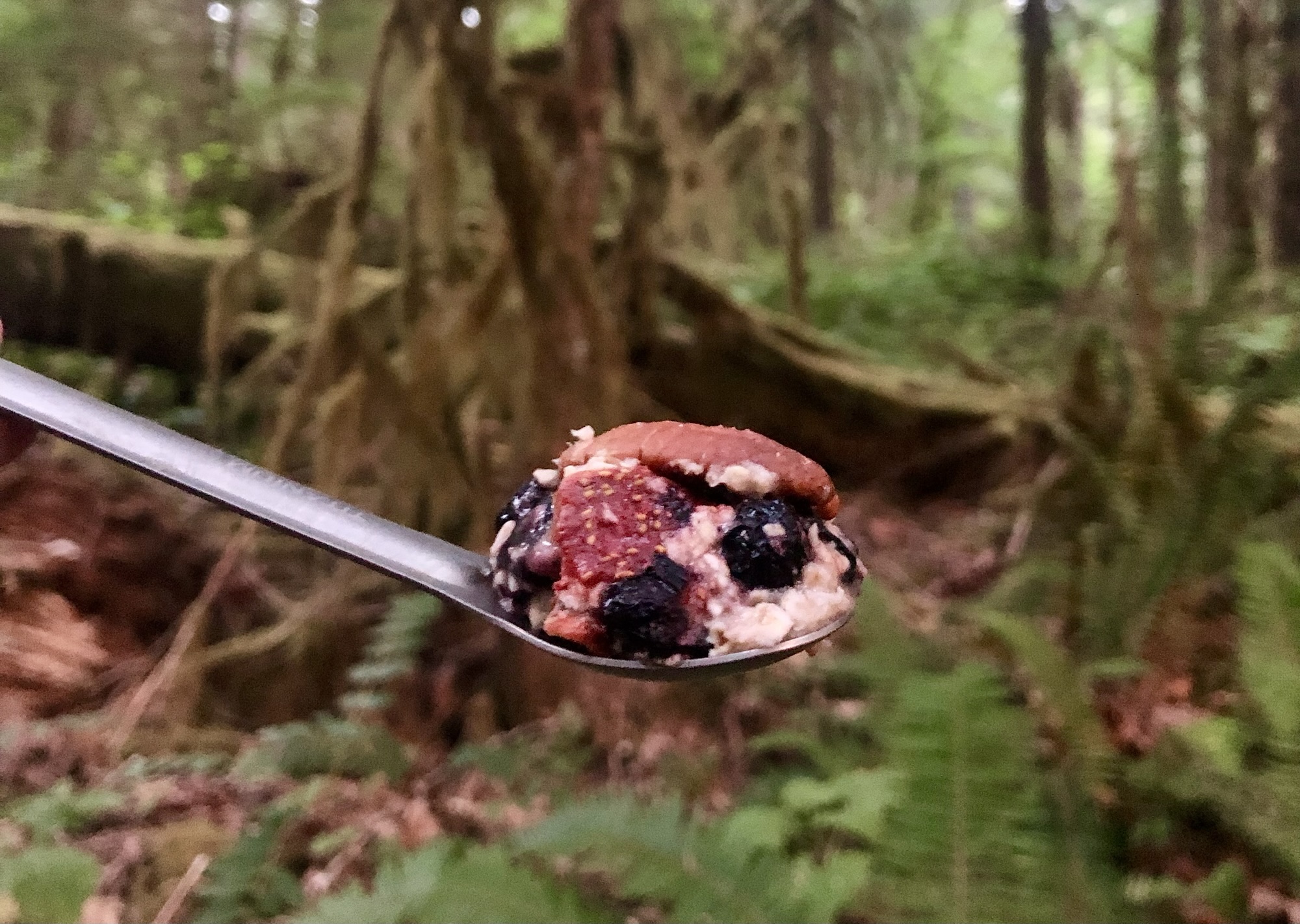
- Hearty Oatmeal: On colder mornings or when I crave something warm, I’ll have unsweetened instant oatmeal. I add high-fat nuts like pecans or walnuts (excellent sources of omega-3 fatty acids), freeze-dried berries, and a little coconut sugar. This simple breakfast is a calorie-dense comfort food that’s easy to pack and prepare.
- A Trail Luxury: If I’m lucky enough to pack out an avocado from town, I’ll eat half of it for breakfast. It’s a true luxury on the trail and a fantastic source of healthy fats. (store other half in a ziplock for a snack later)
These options ensure I’m hitting the trail with a full tank of high-quality fuel.
Continuous Snacking: Balanced Energy Throughout the Day
Instead of a traditional lunch, I maintain a steady energy level by continuously snacking throughout the day. This keeps my blood sugar stable and helps me avoid crashing. My snacks are carefully chosen to be calorie-dense and provide a mix of complex carbohydrates and healthy fats.
- The Classics: Nuts are a classic trail snack and are easily found in most trail towns. My go-to is making the classic mix, GORP (Good Old Raisins and Peanuts), and to switch things up, I’ll sometimes add Craisins. I pack harder-to-find nuts like macadamia nuts and pecans in my bounce box for variety. Beyond nuts, I also love snacking on roasted and salted pumpkin seeds, as they are a particularly rich source of essential minerals like magnesium and zinc.
- My go-to trail snack bars are Aloha bars, which I always pack in my resupply boxes. They’re made with clean ingredients and are organic, gluten-free, and packed with plant-based protein, calories, and fat. Plus, they have a big variety of delicious flavors, making them a welcome treat on any mile. While I can easily find other bars on the trail to add calories to a resupply, these are my absolute favorites that I never get tired of eating.
- Calorie Powerhouses: For a serious calorie and fat boost, I rely on easy-to-find Fritos. While they may be the least healthy thing I eat on the trail, they are a salty, lightweight calorie bomb that I can’t do without. For another quick and easy dose of fat, I also eat spoonfuls of peanut butter straight from the jar.
- Green fuel: Just like for breakfast, if I’m lucky enough to pack an avocado from town, I’ll eat the other half later as a snack. This creamy snack is a fantastic source of potassium, an essential electrolyte for hikers, with even more than a banana.
These snacks are packed for easy access, allowing me to fuel on the go and keep my momentum strong.
Evening Recovery: Ample Protein for Repair
After a long day of hiking, my body needs protein and carbohydrates to repair and refuel for the next day’s miles. I craft and pre-mix all my own plant-based dinners at home in freezer bags, allowing me to build hearty, high-protein staples that are easy to cook on the trail—All they need is hot water or a bit of time for cold-soaking. These meals have fueled me for thousands of miles, and surprisingly, my taste buds are still not sick of them.
- Grains and Legumes: My high protein dinners include black beans, pinto beans, lentils, textured vegetable protein (TVP), and split peas, which I pair with grains like quinoa and instant white and brown rice. Each meal usually has a grain and a legume for a complete protein, which is key for muscle repair and recovery. For a delicious example, check out my easy beans & rice recipe.
- Custom Mac ‘n’ Cheese: I craft custom-made vegan, gluten-free mac ‘n’ cheese. To bump up the flavor and protein, I add (TVP), dehydrated broccoli, and a kick of taco seasoning. I cook and dehydrate the noodles at home to ensure they rehydrate easily on the trail, and all the powders are pre-mixed for ultimate convenience. (recipe post coming soon)
- Flavor and Nutrition: I use a variety of seasonings and dehydrated veggies in all of my dinners. My go-to’s include taco seasoning, curry powder, and nutritional yeast—a key source of B vitamins and savory, cheesy flavor. I also add dehydrated vegetables like spinach, onions, and broccoli. This not only adds flavor but also ensures I get vital micronutrients.
- Evening Treat: A favorite is my simple, no-cook “chocolate pudding,” which I pre-mix at home with chia seeds and Plant-based Chocolate Protein Powder. On the trail, I just add water and stir, letting it sit to thicken. This delicious, lightweight, nutrient-dense treat delivers serious protein.
This system allows me to create a variety of satisfying meals from hearty curried lentils and quinoa to a spicy bean and rice bowl, all while hitting my protein goals.
Town Day Feasts
After weeks of dehydrated meals, there is nothing like a town day feast. It’s my chance to refuel and binge on massive amounts of calories and nutrients. Since many trail towns only have a gas station market and non-vegan-friendly restaurants, my town day as a vegan and gluten-free hiker is often less about menus and more about a glorious grocery store haul..
Here’s what my town day feasts look like:
- Taking What I Can Get: In my “real” life, I try to avoid junk food, but on the trail, you sometimes have to make compromises. In some towns, the gas station market is all there is to choose from. My best “healthy” options are usually cranberry juice, V8, and fresh fruit like a banana or an orange. I simply take what I can get to tide me over until the next town, because anything different is a nice change for my taste buds.
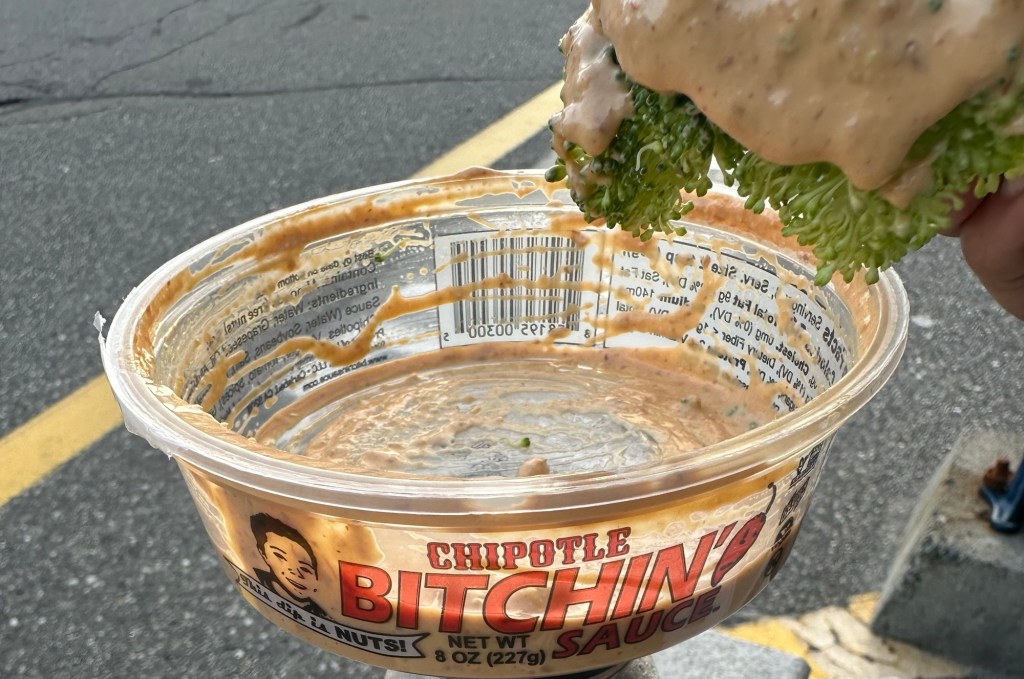
- The Proper Grocery Store Feast: When I am lucky enough to find a proper store, I satisfy my cravings with fresh options. My cart is full of dips like hummus and guacamole with fresh veggies, tubs of salad, and the occasional can of chili or crushed pineapple eaten straight from the can. I also make sure to seek out fresh juices whenever I can.
- The Restaurant Lottery: On the rare occasion I find a place with vegan and gluten-free options, it’s a true celebration. My choices for a meal are typically limited to a lettuce-wrapped veggie burger, a pizza with a gluten-free crust topped with veggies and no cheese, veggie tacos, or a simple plate of fries.
Plant-Powered
From fat-fueled mornings to protein-packed dinners, this is how I fuel every day on the trail, proving that a plant-based diet is a delicious and effective source of nutrition for long-distance hiking. But having the right food is only half the battle. In Part 3, I’ll reveal my unique resupply strategy, showing you exactly how I get these custom meals to me on the trail, wherever I am.
What recipe would you like to see a step-by-step breakdown of? Let me know in the comments!
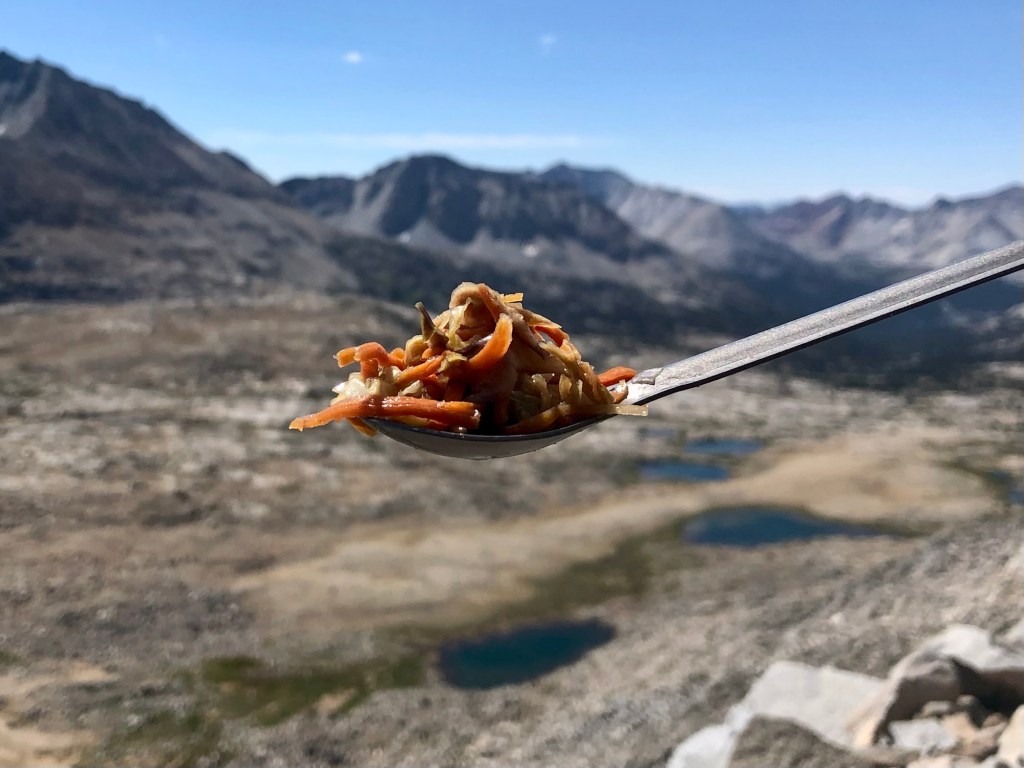
Trail-tested, hiker-approved. Here’s a look at some of my delicious backpacking meals, one spoonful at a time.


 Dash & Dirt
Leave a comment